

Picture the scene. It’s sometime in the mid-to-late 2000s. You’re sitting in a council meeting and two groups are locked in heated debate. You’ve got cyclists, pedestrians, road safety campaigners – calling for widespread traffic calming measures. Speed humps. Chicanes. Road narrowing. Physical interventions that will force motorists to drive at slower speeds.
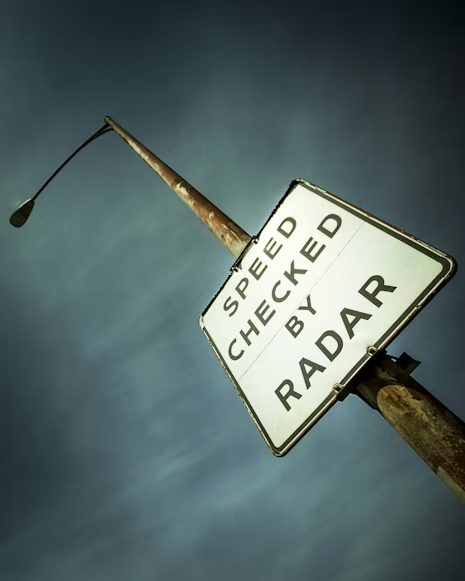
Opposing them are road safety lobbyists armed with a rather neat-looking metal box affixed to a wall near you. Yes – speed cameras.
This scene plays out in council rooms, parish meetings, newspapers and blog posts up and down Britain, and has been doing so for decades. Both sides claim their favoured solution will save lives. Both have facts and figures to back up their arguments.
But which of these is truly livesaving? When we look at the evidence objectively and fairly, only one stands up to scrutiny. And it’s probably not the one you think…
This matters. This is what decides whether our kids get safely to school. Whether our elderly relatives can cross the street outside their local shop. Whether someone from your family gets that phone call no-one wants to receive. The resources we have for tackling danger on our roads are limited. We need to use them in a way that will save lives and make a real difference.
Speed Cameras
Ok – hear us out. Speed cameras clearly do reduce speeds. There, we said it. EVERY camera site we know and love (or loathe) sees reductions in speeds when a camera is installed. We’re not debating that.
The evidence shows time and again that speed cameras work (providing your definition of ‘working’ actually means lower speeds). Trials run by the DfT show significant speed reductions at camera sites. Lower speeds generally mean fewer collisions and casualties.
Analysis by insurance company Swinton found that fatal and serious collisions reduced by an average of 42% at sites with cameras installed. That’s actual people who would’ve been killed or seriously injured if they crashed, who walked away instead.
Speed cameras change driver behaviour through threat of punishment. Financial penalty and points on your licence are enough to convince most drivers to knock it down a notch or two.
They’re cheap compared to redesigning roads. You can roll them out quickly in response to collision data. They’re on duty 24/7 and don’t suffer from alcohol, distractions or tiredness. They pay for themselves in fines. And let’s face it – with public sector budgets the way they are, those last two points are HUGE.
Average speed cameras especially have come a long way in recent years. By tracking speeds continuously along a road they eliminate the kangaroo effect of braking for a camera only to accelerate as soon as you’ve passed it.
There’s no doubt speed cameras save lives at the locations they’re installed. But for every child who walks safely to school past a camera, another is crushed by a bus crashing through a pelican crossing on a road that’s just far too wide.
Cameras don’t change driver behaviour in the long term
The fundamental problem with speed cameras is that they don’t change the road environment. Let’s take a generic 30mph road as an example.
It’s wide and straight with good visibility. There are few distractions; road surfaces are smooth and consistent. Drive a car along here with the speed limit as your guide and you’ll naturally cruise at 40mph, 50mph. It feels safe. There’s nothing about the design of the road itself telling you to slow down.
Now add a speed camera.
If drivers know it’s there they’ll brake as they pass it (then probably accelerate again). One day they won’t see it and they’ll slam on the brakes as they go past. Someone behind them won’t see they’ve slammed on the brakes and they’ll rear-end them. You end up with a cycle of sudden braking and accelerating every time someone passes the camera – encouraging bad driving behaviour.
Good drivers drive to the road environment. Speed limits and cameras be damned. They’re part of a psychological toolkit known as Search-Evaluate-Decide-Act or SEMA for short. Humans construct a mental model of their environment using cues like lane width, road surface quality, nearby objects and more to decide how fast it’s safe to drive.
A speed camera can’t change these things. In fact it has little effect on driver behaviour at all once they’ve passed it. Cameras take a wide variety of road and treat them homogeneously. They punish those who fail to adhere to the limits but they don’t teach.
That’s why speed cameras don’t work in the long term. They force drivers to drive at or below the speed limit for as long as they’re paying attention to that particular camera. Once they’ve passed it and no longer ‘know’ their speed, they revert to driving to the road.
Traffic calming – it’s not just speed humps anymore
Now, let’s look on the other side. Let’s imagine we apply some genuine traffic calming measures to our magic 30mph road.
Instead of flashing cameras threatening punishment, we introduce…
Speed humps. Narrowing. Chicanes. Rumble strips. Surface treatments. Trees. Planters. All those nice things that encourage drivers to drive at 30mph, not 40mph or 50mph.
Instead of braking as they pass a speed camera, our drivers encounter – drumroll please – SPEED TABLES. This instantly has two effects. Firstly the car physically judders as it passes over the table. Engine revs fluctuate. Suspension components flex. Your mum complains her arthritis is acting up.
Your speedo tells you you’re driving far faster than the limit. The feedback you’re receiving from the road itself tells you to slow down. Unlike speed cameras which rely on your knowledge of their location to affect behaviour, traffic calming works on everybody, all the time.
What’s more, the best kind of traffic calming doesn’t just stick to one trick. Instead it presents drivers with a SERIES of speed reducing measures. Roads that have been streetscaled regularly use a mix of:
Horizontal deflection – e.g. chicanes/build-outs that force drivers to weave in and out as they drive along. Horizontal deflection works really well because it makes driving above the speed limit literally difficult.
Vertical deflection – Think speed humps, raised crossings, speed tables. These politely remind drivers about the correct speed limit by up and down feedback about their speed.
Narrowing – The art of making roads LOOK narrower than they really are. Paint some squares on the road, add a few planters/bollards and suddenly your 7m wide carriageway feels like a motorbike rode along it.
Gateway treatments – Marking crossings where drivers are entering and leaving residential areas/building different surfaces/inserting rumble strips are all examples of ‘gateway treatments’. They send a clear signal to drivers that they need to take care.
Pedestrian priority – This can be things like raised crossings, refuge islands and continuous footways across side roads. They show drivers that pedestrians come first.
All of these tools work together to tell drivers they need to slow down. Traffic doesn’t just ‘know’ there’s a school nearby because there’s a sign saying so. They know it when they see kids playing on the street, windows open in houses, cars parked outside. They know it when the road narrows, and they feel it when they hit a speed hump.
Give drivers clear cues about how fast is safe to drive at…and they’ll drive at that speed. Factor in that speed calming doesn’t just affect one group of drivers and you’ve got a life-saving technique.
Except drivers don’t speed around children because they don’t know there are children there. They speed because they can. On roads that allow it. Speed cameras expect drivers to know and remember where they are. Traffic calming expects them to drive at safe speeds, wherever they are.
Cynical? Moi?
So there we have it. Physical traffic calming measures save lives. Namely by forcing drivers to drive to the road environment rather than driving how and where they want. But does that mean speed cameras should be banned? Of course not. They’ve undoubtedly saved lives at camera sites.
Alright, so we’ve established that there’s a fundamental difference between these two collision reduction methods. So which actually works better?
What the studies say
It’s quite simple when you look at the data. Speed cameras don’t actually work that well. Meanwhile, physical traffic calming measurably and reliably saves lives.
Traffic calming works. There, I said it.
A study published in the BMJ found that casualty reduction was 42% within the stretches of London roads where physical traffic calming measures were present. Here’s the kicker: they found that there was a reduction in casualties on the adjoining roads as well!
Another study by Transport for London found that traffic calming consistently reduced speeds over greater distances when compared to camera enforcement alone. You’ll typically see speeds reduced by 5-10mph in the area of camera enforcement. Great! But then speeds quickly return to previous levels once drivers pass the camera. Speeds reduced by well designed traffic calming schemes do not…
Studies looking at injury reduction in residential areas that implemented full-fat traffic calming have seen child pedestrian injury rates slashed by up to 70%. It’s not just the speeds that are lower, it’s the expectation that pedestrians will be present. Drivers notice things better when they’re driving slower.
What’s maybe more impressive about traffic calming is that reductions have also been seen in the severity of collisions that do happen. One of the reasons physical calming works so well is because the risk associated with collisions is exponentially linked to speed. A pedestrian hit at 30mph has around a 1 in 5 chance of being killed. At 20mph that risk is around 1 in 40. Traffic calming doesn’t just make collisions less likely, it makes them less severe.
Community Gain
Aside from all of the death and life-saving stuff, physical traffic calming also supports street-level communities better than speed cameras. Speed cameras turn roads into police states. They don’t create places where kids want to walk or cycle. They don’t calm anything.
Traffic calming though… it brings streets to life.
Where speeds are reduced drivers and cyclists are happier to mingle. People walk more. Parents allow their kids to play outside. The elderly feel safe crossing the road to chat with their neighbour. Local businesses see more custom as people are happy to drop pop in. Trees get planted, creating places for kids to play and habitats for insects and birds.
Traffic calming creates places. Speed cameras enforce police lines on a road.
When streets are properly calibrated for human habitation we also see knock-on benefits to public health. More walking and cycling, childhood obesity levels reduce as kids walk or cycle to school. Better air quality as through traffic is reduced and vehicles drive at lower speeds, emitting fewer pollutants and producing less particulate from brake and tyre dust.
There are no community gain elements to speed camera enforcement. They remove collisions from a single point on a street. Unless you live right next to a camera you’re unlikely to notice them at all.
Expense
Speed cameras are cheaper to implement than most physical traffic calming methods. But they’re also much more expensive to operate. You need people to monitor the cameras and process the ensuing fines. The cameras themselves need regular calibration and maintenance checks. They will get vandalised. They will break down. Camera enforcement is a never ending battle against automation gangs and rogue motorists.
The beauty of physical traffic calming is that once it’s installed it pretty much looks after itself.
Sure, speed humps may need topping up every now and then. But they aren’t going anywhere. You don’t need to send anyone around to monitor them, and they can’t get hacked.
And after the initial installation barriers communities are far more likely to back them. Why? Because they can see the benefits and feel the difference. Roadie Kids and Tweakers alike love well designed calming measures.
So when looking at the balance sheet physical traffic calming comes out on top time and time again.
Conclusion
Physical traffic calming saves lives. Speed cameras do not.
Physical traffic calming benefits communities. Speed cameras are a surveillance tool.
Physical traffic calming is cheaper in the long run. Speed cameras simply aren’t.
Winner: Physical traffic calming.
Well designed speed humps, chicanes, build-outs, rumble strips…. These are the kind of measures that bring life to residential streets.
We need to shift our focus away from camera enforcement and onto street design. Sure, cameras are fine. They have their place. But they shouldn’t be seen as a solution to road danger. Instead we should be looking to tackle the very things that make our roads dangerous in the first place.
Slow traffic down and you won’t need cameras.
