

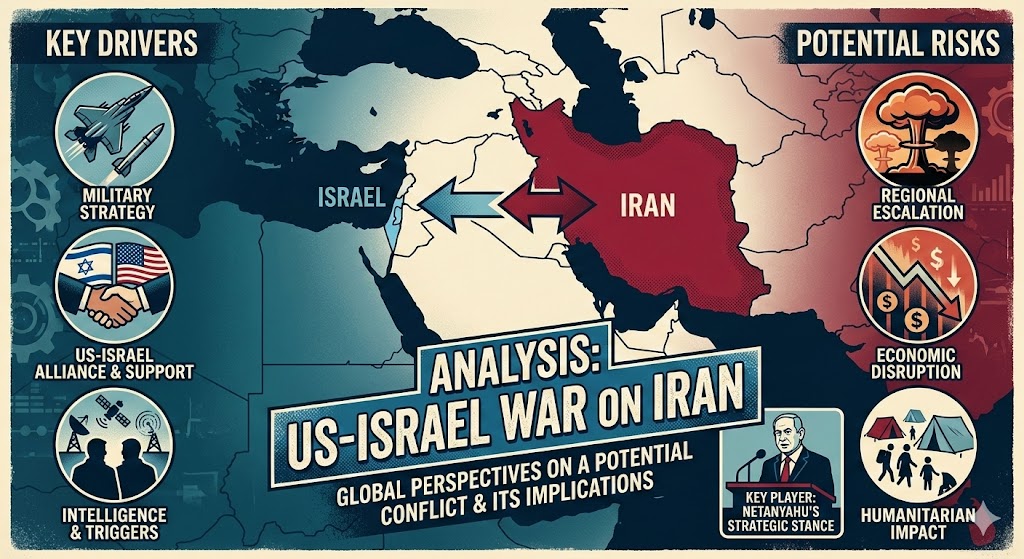
Israeli Prime Minister Benjamin Netanyahu has said the ongoing military conflict involving the United States and Israel against Iran is “not going to take years,” signaling his belief that the war will be intense but relatively short-lived compared to protracted modern wars. His comments come amid one of the most serious escalations in Middle East geopolitics in decades, following coordinated strikes against Iranian targets and retaliatory attacks across the region.
In this article we explain what Netanyahu’s statement means, why it matters globally, and how this perspective fits into the broader geopolitical, security, humanitarian, and economic context of the current conflict. We also examine possible scenarios for how the war could unfold and what it means for the world.
Clear Definition: What Netanyahu Meant
When Netanyahu said this conflict is “not going to take years,” he was contrasting the current war with historical extended wars such as those in Iraq and Afghanistan. Instead, he suggested the military campaign against Iran’s capabilities and leadership may be intense but bounded in time.
This is significant because it frames the war as a targeted strategic operation rather than an open-ended engagement.
Background and Why This Conflict Matters
The 2026 conflict followed escalating tensions between Iran and Western allies, particularly Israel and the United States, over Iran’s regional influence, nuclear ambitions, and involvement with armed groups across the Middle East. Previous limited confrontations and proxy clashes gave way to direct air-strikes and retaliatory attacks in late February 2026.
The most recent phase was triggered when U.S.-aligned and Israeli forces targeted Iranian military infrastructure and leadership figures, including Supreme Leader Ayatollah Ali Khamenei. Iran has responded with missile and drone strikes on Israeli territory and U.S. interests in the Gulf.
This conflict is now unfolding not only on Iranian soil but across the broader Middle East, involving non-state groups such as Hezbollah and prompting defensive actions from several Gulf countries.
How Current Military Dynamics Work
Joint US-Israel Strategy
Netanyahu’s remarks reflect a plan where:
• The U.S. and Israel coordinate air and missile strikes on key military and strategic targets in Iran.
• Objectives include degrading Iran’s missile systems, command infrastructure, and alleged nuclear program.
• Ground forces have not yet been committed, but air, naval, and defensive operations continue.
Iran’s Response
Iran has launched missile and drone attacks against Israel, U.S. military bases, and critical infrastructure in the Gulf, including at least one strike near the U.S. embassy in Riyadh.
Regional Escalation
Proxies such as Hezbollah have increased strikes on Israeli territory, prompting counter-attacks. The conflict’s geographic footprint now spans several countries in the Middle East.
Key Facts and Data
Accurate data in conflict zones can be difficult, but current reporting indicates:
• The conflict is intensifying with multiple casualties on all sides, including U.S. service members.
• Attacks have affected civilian populations in Iran, Israel, and neighboring states.
• Oil shipping and aviation have been disrupted near key chokepoints such as the Strait of Hormuz.
• Public opinion in the U.S. shows limited support for the campaign’s objectives.
These facts highlight the multi-dimensional impact of the conflict.
Strategic Rationales and Perceived Benefits
Proponents of the military approach argue:
• Rapid Degradation of Threats: A focused military campaign could neutralize capabilities without decades-long occupation.
• Deterrence: Demonstrates resolve against regimes perceived as hostile to Western or Israeli security interests.
• Opportunities for Political Change: Netanyahu has argued the campaign might weaken Iran’s regime and create room for internal shifts.
• Preservation of Alliances: Reinforces U.S.–Israel strategic cooperation.
These points reflect how leaders frame the conflict, even amid uncertainty.
Risks and Criticisms
Not all analysts or global actors agree optimism over duration is realistic. Key concerns include:
• Humanitarian Impact: Civilian populations are suffering displacement, injuries, and loss.
• Regional Destabilisation: The conflict could spread beyond Iran, Israel, and the Gulf.
• Economic Shockwaves: Energy markets are sensitive to instability in the Middle East.
• Uncertain Political Outcomes: Even a short campaign might not resolve deeper political tensions.
These criticisms underline that shorter duration does not mean limited consequences.
Comparative Perspectives
Unlike the protracted wars involving the U.S. in Iraq and Afghanistan, where ground operations extended for years, this conflict so far is primarily air and missile-based with no declared long-term occupation strategy by either the U.S. or Israel. That has shaped Netanyahu’s expectation that it will not last years.
However, other conflicts in the region — including the Gaza war and past Iran-linked escalations — show how quickly localized operations can evolve into broader confrontations.
Real-World Implications
Global Energy Markets
Oil prices and shipping costs have risen as the Strait of Hormuz sees disruptions and heightened risk to tankers.
Defense Postures Worldwide
Countries in the West, Asia, and the Gulf have reassessed military presence in the region.
Civilian Safety
Evacuations, airspace closures, and travel advisories reflect the conflict’s impact on ordinary lives.
Future Outlook and Trends
Possible Scenarios
• Decisive Campaign with Limited Duration: Netanyahu’s prediction holds if military goals are achieved efficiently.
• Stalemate with Periodic Escalations: Retaliatory actions could slow progress and extend engagement.
• Wider Regional War: Spillover into Lebanon, Syria, or Gulf states could lengthen conflict.
• Diplomatic Resolution: Backchannels may still emerge, though timelines remain unclear.
Experts note that duration is not the only measure of impact; intensity, diplomatic fallout, and global reactions matter just as much.
Frequently Asked Questions
1. What did Netanyahu mean by the war not taking years?
He meant that, while the conflict may take some time, the U.S.–Israel coalition believes it will be shorter than long-drawn wars of recent decades.
2. What are the main aims of the US and Israel in this conflict?
Both governments say they want to degrade Iran’s military capabilities and prevent future threats, though detailed political goals vary.
3. Is Iran trying to retaliate?
Yes, Tehran has launched drone and missile strikes against Israel and U.S. bases, contributing to wider regional tensions.
4. Will this conflict spread beyond Iran and Israel?
There are indications the war already involves other groups like Hezbollah and risks involving Gulf states and other Middle East actors.
5. How are global markets reacting?
Energy markets are volatile due to fears of supply disruptions in key maritime routes like the Strait of Hormuz.
Conclusion
Netanyahu’s statement that the war with Iran “is not going to take years” captures a hope and strategic framing held by Israeli leadership and aligned U.S. policymakers. But with military, humanitarian, economic, and diplomatic stakes high, the world watches closely. Shorter duration does not guarantee a simple resolution, and global ripples from this conflict — energy markets, alliances, internal politics, and regional stability — will shape international affairs long after battles subside.
